This is a guest post from Tim Frank.
Over the years there have been frequent calls for subsidising longer-distance regional and inter-regional public transport, whether by bus or train. Last year then opposition transport spokesperson Simeon Brown has repeatedly said that adequate long-distance bus services are already provided commercially. In his opinion there’s no point in the government interfering.
There is probably quite some disagreement on what adequate service represents. I wanted to compare the current service with what was on offer previously. The long-distance route I and my family regularly travel is between Christchurch and Timaru. Strictly speaking that’s not an inter-regional service, as it is all within the Canterbury Region, but Ecan for some reason has never planned public transport on this route, but rather left it to commercial operators. It has most frequently been serviced by trains and buses that travelled between Christchurch and Dunedin and even further south to Invercargill or Te Anau.
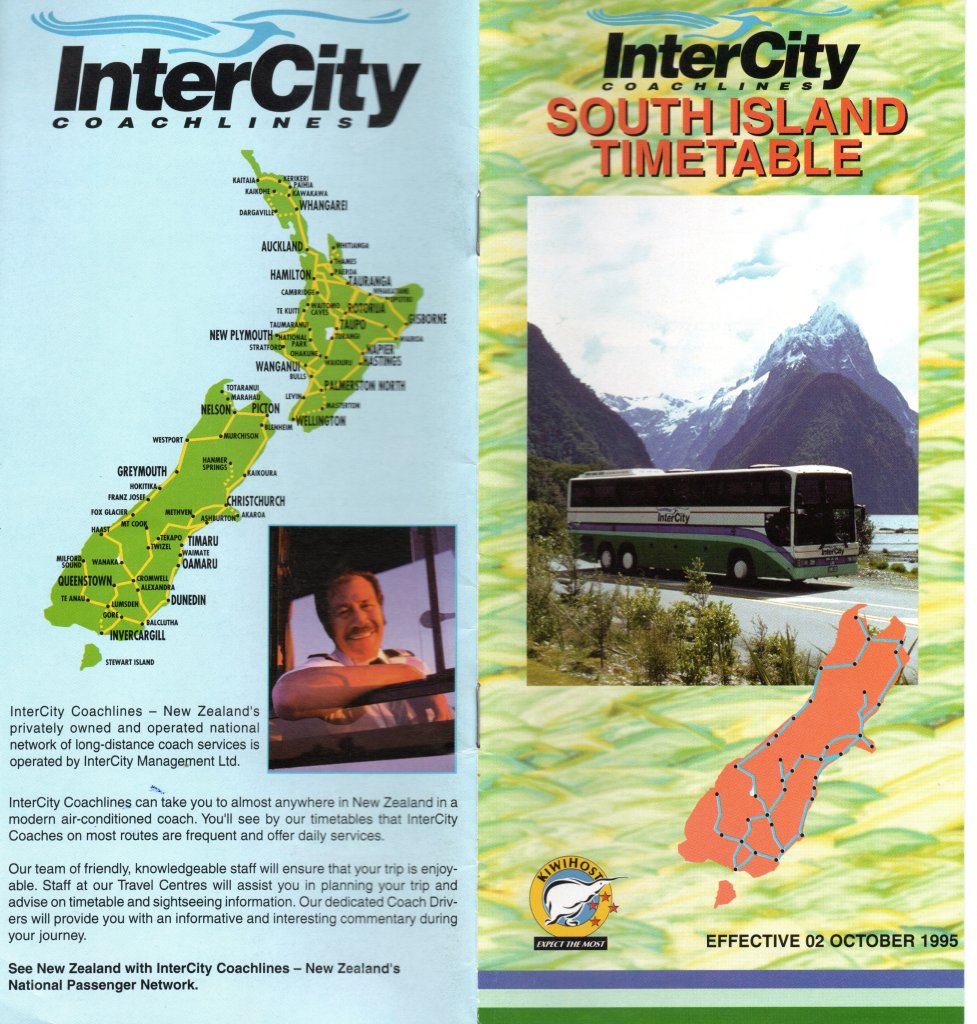
Currently there is only one commercial operator on this route: InterCity. Two services in each direction connect the two Canterbury cities daily. These services continue to and from Otago and (one service) Southland. In addition, there is a health shuttle for patients that have to access medical care in Christchurch, but that is not a public service.
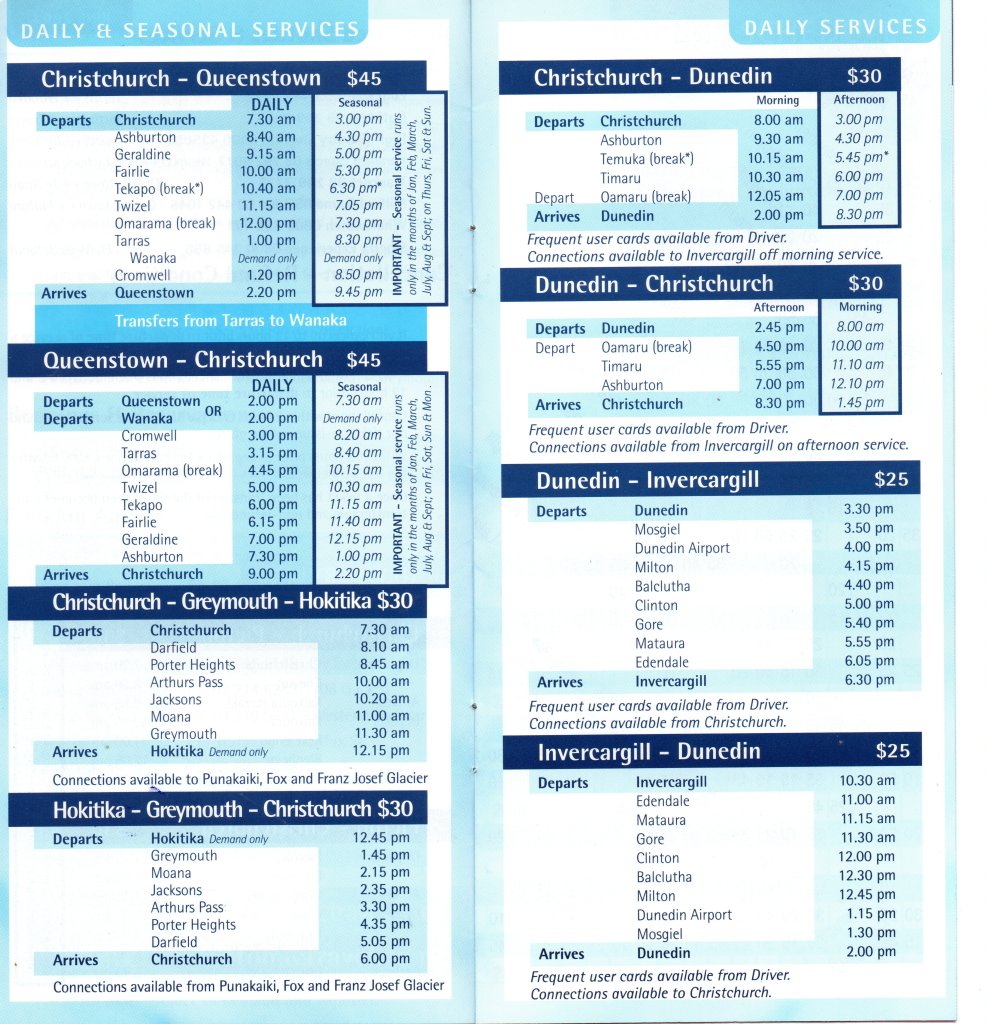
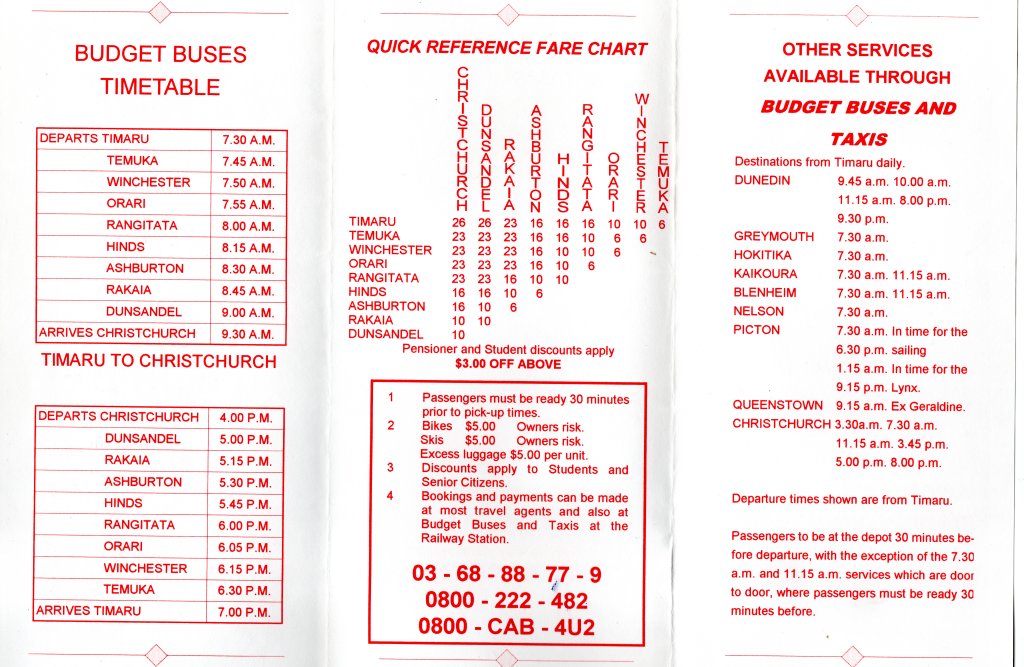
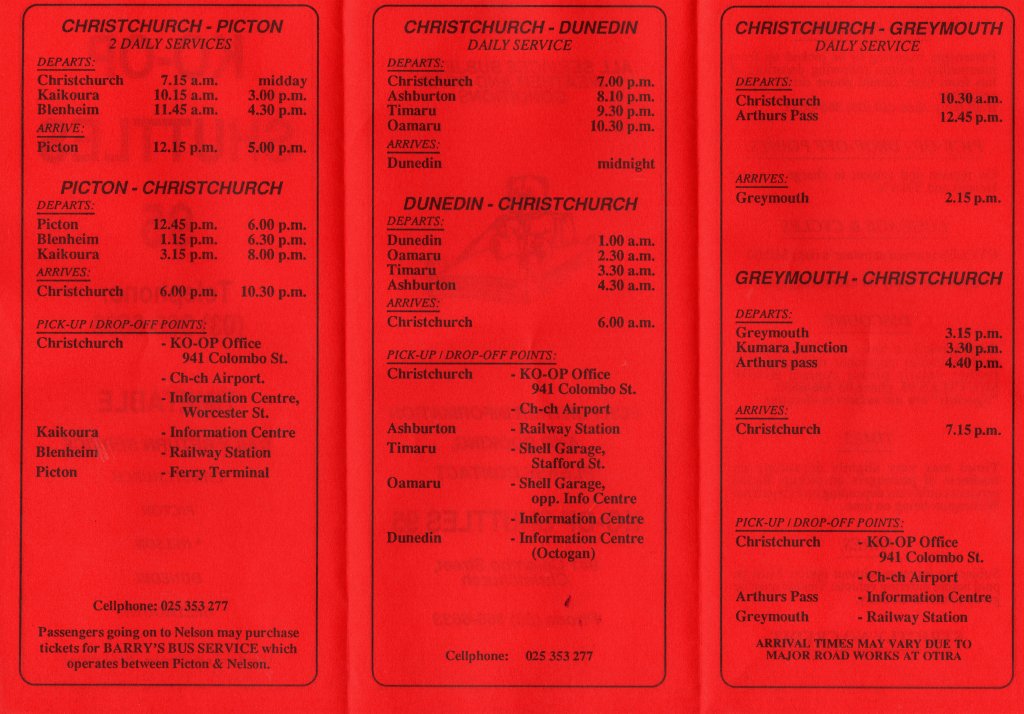
I recently sorted through some of my old documents and came across brochures for bus services on this route in the 1990s. While there was a bit of flux with several operator and timetable changes, there were far more options available. For example, Budget Bus lists 8 departures a day from Timaru to Christchurch. Only one of these services was provided by Budget Bus itself: that service left Timaru at 07.30 in the morning and departed Christchurch at 4.00 pm in the afternoon. The other services were provided by other companies, such as KO-OP Shuttles, which ran an overnight service to Dunedin. I’m not sure about the providers of all the services listed in the brochure.

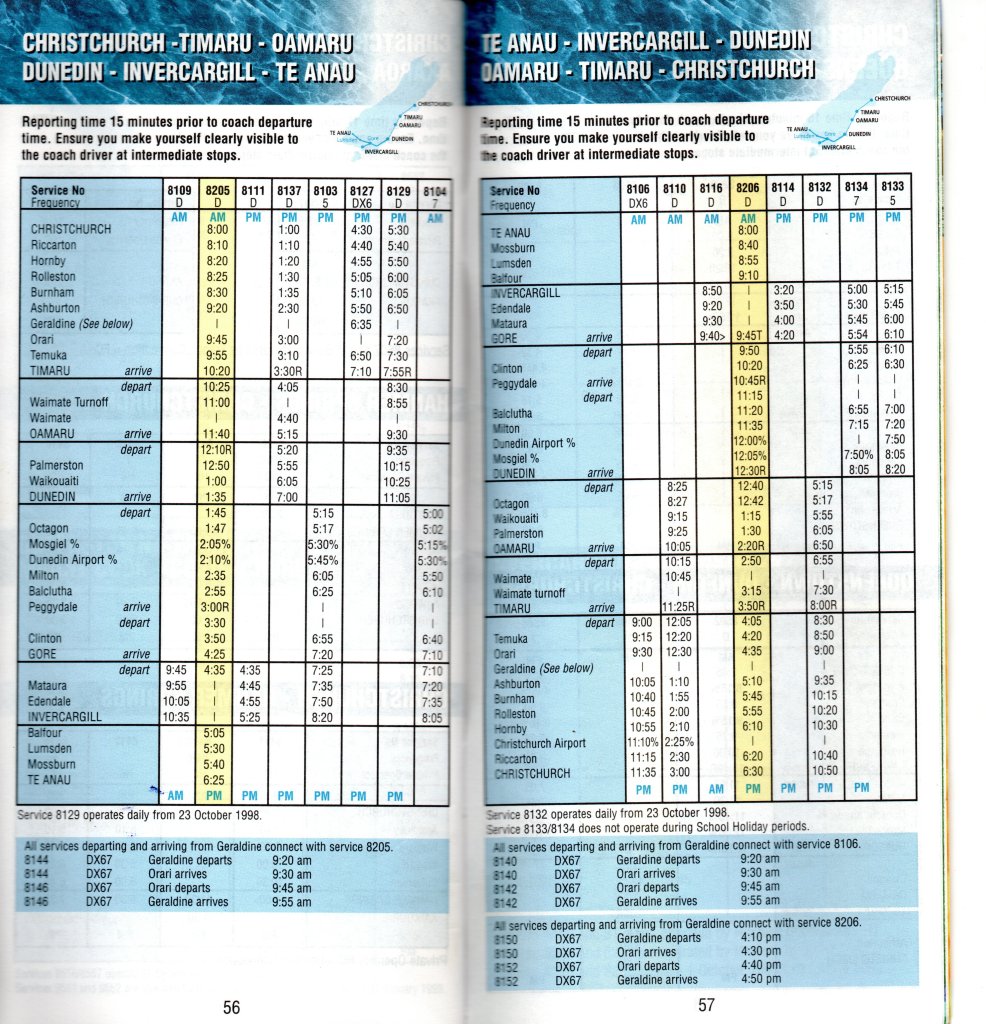
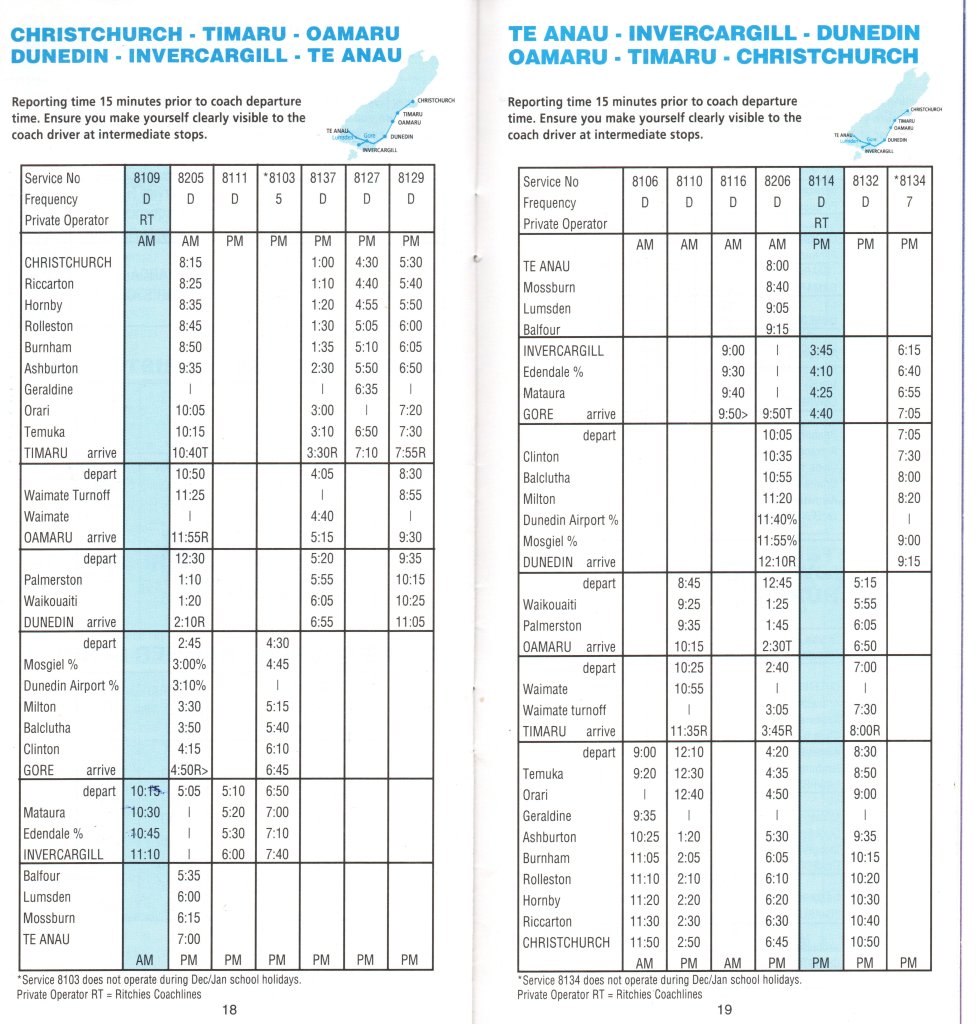
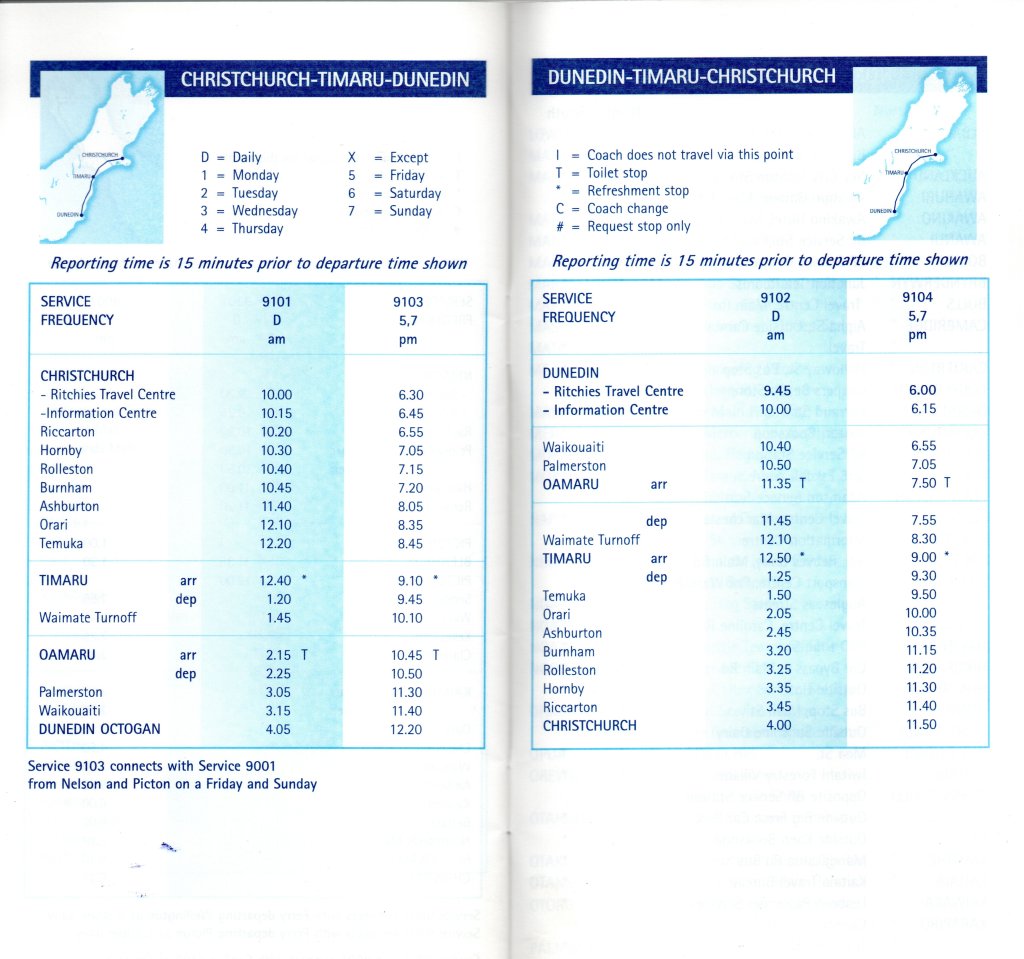
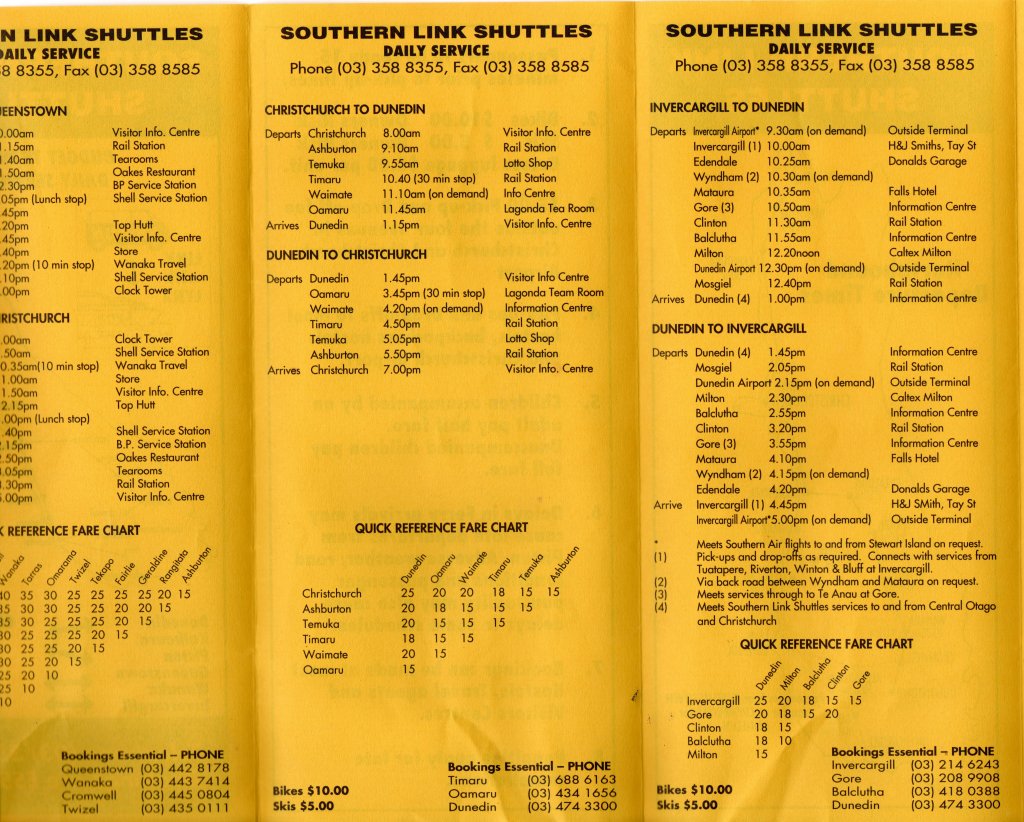
One other operator between Christchurch and Timaru was Atomic Shuttles. It ran two return services per day between Christchurch and Dunedin. Southern Link Shuttles ran a return service in direct competition with Atomic Shuttles at similar times. For a brief period Newmans Coachlines also operated a regular service on the route, favouring a late morning departure from both Dunedin and Christchurch, running at a different time from the other providers. There were four InterCity services between Christchurch and Timaru in each direction on most days.
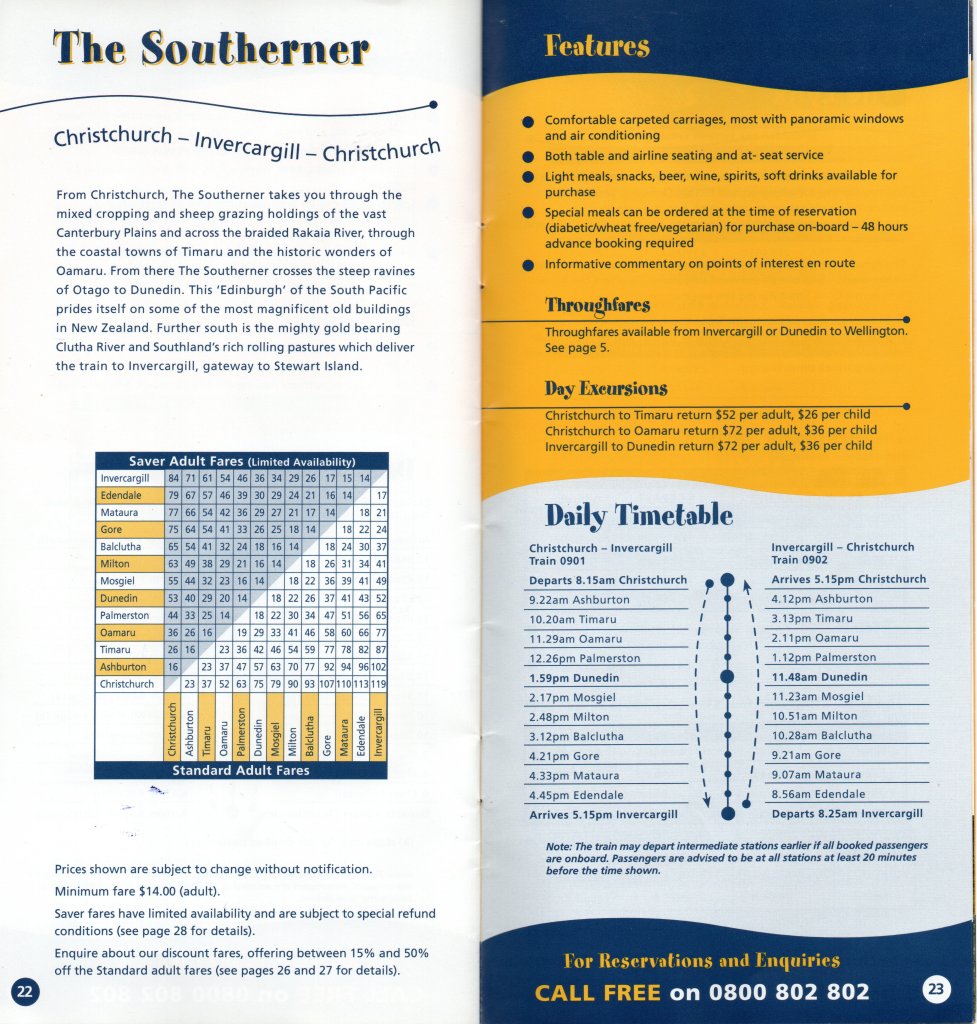
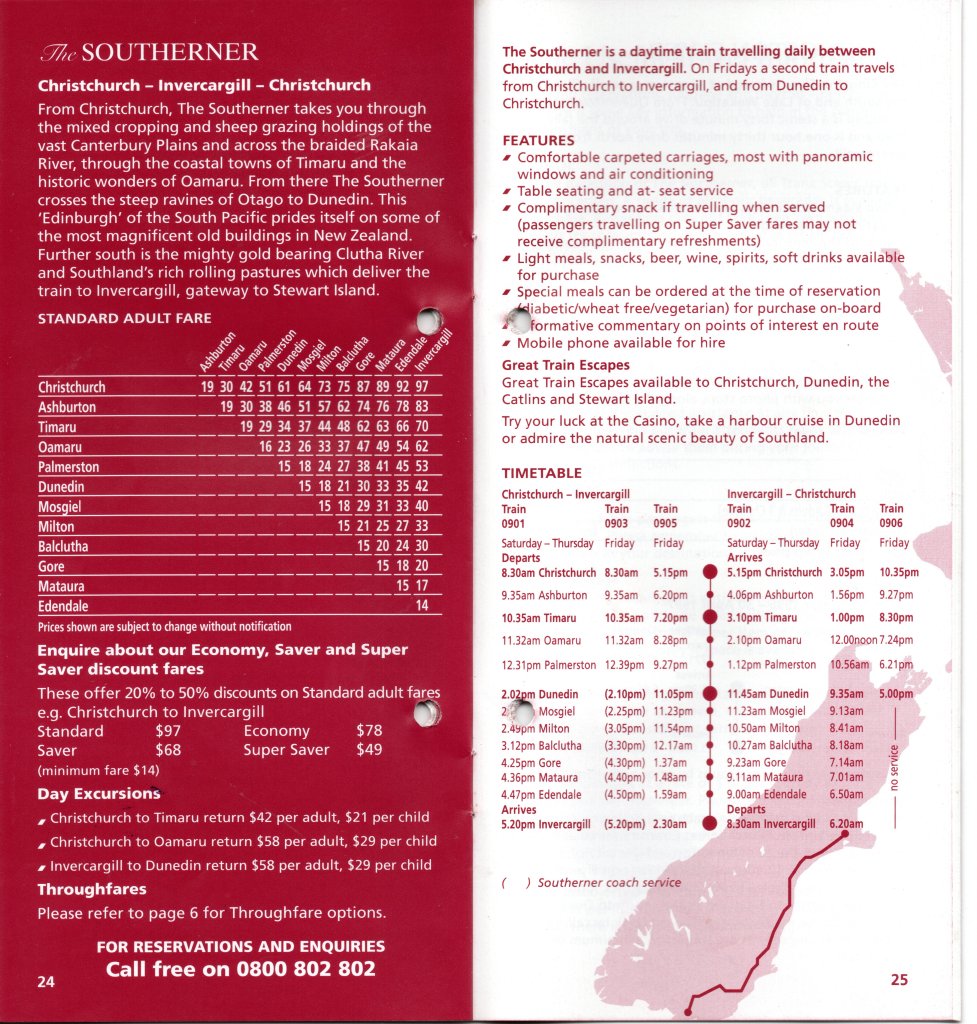
Many of the bus services competed with the Southerner train, which departed Christchurch at 08.15 am and returned through Timaru at 3.13 pm. The Southerner, InterCity, Atomic Shuttles, and Southern Link Shuttles therefore had similar departure times for the main service.
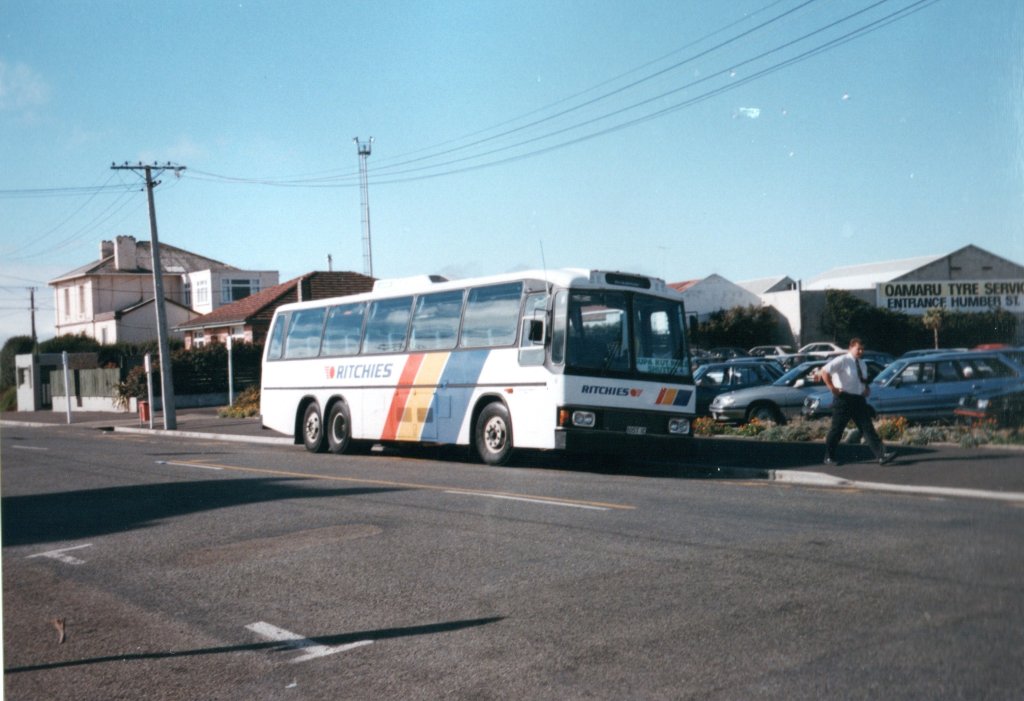
From 1996 to 1997 TranzScenic tried an additional service between Christchurch and Dunedin on Fridays, but this was not very successful. Ritchies also introduced the Supa-Kut-Price Shuttle to allow InterCity to undercut the other services. This service used very old buses that did not have the best safety record. My sister once saw one of the rear wheels travelling alongside the bus rather than attached to the rear axle. Supa-Kut-Price Shuttle had its reliability issues and only the most budget conscious travellers would use it again, once they experienced it.
For people wanting to travel between Christchurch and Timaru there were many options and certainly competitive prices. The demise of the Southerner also needs to be seen in this environment, when the big bus companies were prepared to suffer losses to gain market share.
This intense competition did not last. Newmans was folded into InterCity in 1998. KO-OP Shuttles was replaced by the Knight Rider, which continued to move travellers to Christchurch Airport for a decade longer. Once Southern Link Shuttles ceased, the Supa-Kut Price Shuttle no longer was necessary. Atomic Shuttles soldiered on for several years, cutting back its network continually, until COVID-19 meant it now mainly is a charter bus company. It still has a weekly service between Dunedin and Queenstown targeting the student market. Naked Bus entered the market in 2007, but ceased trading in 2018. Even Budget Bus has ceased trading. That means that only InterCity remains.
The lack of competition does not mean that fares have increased drastically. When booking sufficiently ahead, it’s still possible to get fares that are broadly in line with what was offered in the late 1990s – if inflation is factored in. It seems that the main competition to the long-distance bus is still the private car, possibly even more than other bus companies. Overall, public transport services and travellers have reduced over the period, so that today there is little choice. Whether lower traveller numbers meant a cut in services or the cut in services meant fewer travellers is not in clear. Very likely it is a cycle that reinforced itself. Today, long-distance buses provide a limited service between towns and cities for travellers that do not need to travel at a certain time. As such long-distance buses in Canterbury can only provide a very limited transport role: they are no longer useful as feeders to airports, no longer suitable for medical or other appointments, do not provide for business trips, and clearly are not the choice for holiday trips or recreation. Buses still move people between cities and towns to see family, for study or to move to the next job (especially for backpackers).
While urban transport has improved drastically since the 1990s in New Zealand, long-distance passenger transport has deteriorated significantly. Clearly, only in very specific circumstances can it be an alternative to the car. Today’s service is also a long cry from the 1960s when two to three train services and at least three bus services operated between Christchurch and Timaru (and mostly on to Dunedin) each day. The market does not provide an alternative to the car for long-distance journeys, but on some major routes does provide a basic service for those who do not have access to a car. Is that adequate long-distance passenger transport?
 TALKING TRANSPORT
I make this trip several times a year as well – sometimes by bus, sometimes by car. The bus is typically full, but it’s not the most comfortable way to travel, and the times available are not always convenient. I would definitely utilise a train if this was an option, and it may encourage me to travel this route further.
LikeLike