I know a lot of people who get annoyed at speed humps or “raised safety platforms”. They’re uncomfortable to drive over, and you have to slow down to what feels like a ridulously slow speed. If you’re driving a low car it’s especially annoying.
So why do they get put in?
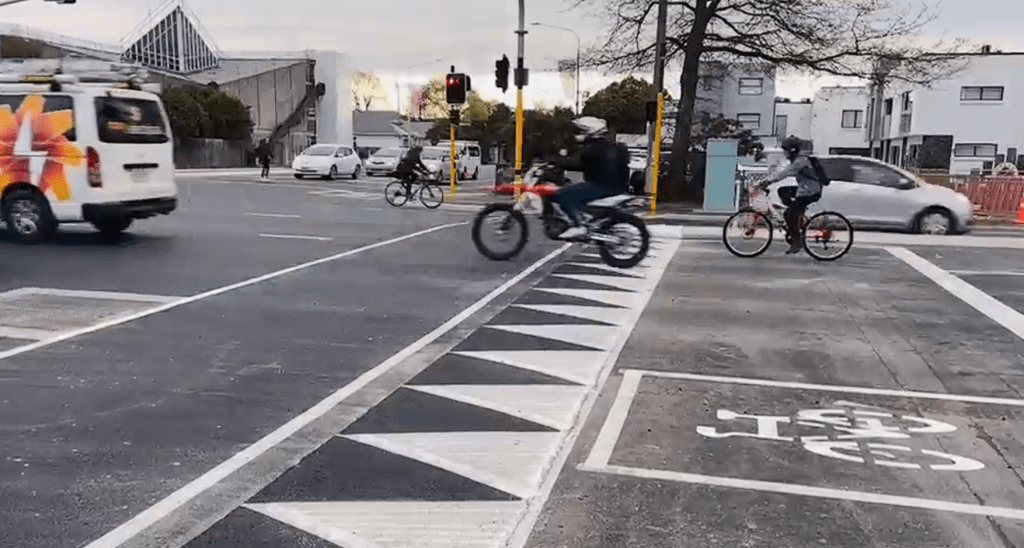
Contrary to how it sometimes feels, it’s not because a bunch of transport planners and road engineers hate you.
Speed humps get installed because they save lives. It really is that simple. Here is an example.
Christchurch City Council installed a raised safety platform at the signalised intersection of Lincoln/Barrington/Whiteleigh Roads in October 2022. It’s a busy intersection that had a poor safety record (was in the worst 30 intersections in NZ at one point). Between 2000-2021, it averaged a crash every 2 months, with a death or serious injury (requiring overnight hospitalisation) every 18 months.
It’s now been two and half years since the raised safety platform was installed so I thought I’d look up the stats and see if there’s been any reduction in crashes. (reminder that all reported crashes in NZ are freely available for anyone to peruse here). I was blown away to find that there’s not been a single crash reported since the raised safety platform was installed! At first I thought this must be a data error but I’ve since checked with others and no, it’s up-to-date, there really has been no crashes reported at the intersection in the last 2 and a half years. That’s absolutely bonkers! Where raised platforms have been installed elsewhere around the world they’ve tended to observe about a 40% reduction in crashes. Even that is considered a big reduction, so to get a 100% reduction is nothing short of amazing.
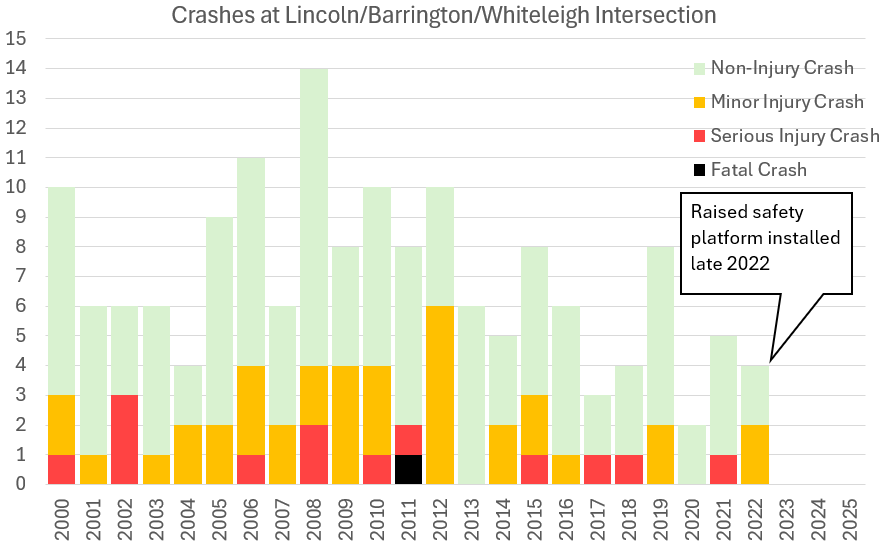
To completely eliminate all crashes overnight is incredible, and even moreso when you think about how cheap and simple this thing was to install. The whole thing was chucked in over one weekend, as seen in this great little timelapse video. There’s also another great little explainer video from a safety engineer here.
One caveat is that this back-of-the-envelope blog is not a proper road safety study. The official reports will be done in due course (probably in another 2-3 years’ time) and they’ll follow a more rigourous methodology with control sites and the like. But still I think this snapshot gives you a pretty strong hint of what the official studies will end up concluding.
So next time you drive over one, remember that it’s not there because road engineers hate you. On the contrary, it’s just there to keep everyone safe, and it’s probably doing its job very well.
Edit: Just noting for completeness that this intersection upgrade also included signal phasing changes (introduction of right-turn arrows) and some minor layout tweaks, which would have helped contribute to the big safety improvement as well.
 TALKING TRANSPORT